Typical applications
Selected posterior restorative cases where a bonded partial-coverage solution is prescribed.

Partial-coverage restorations for conservative restorative planning.
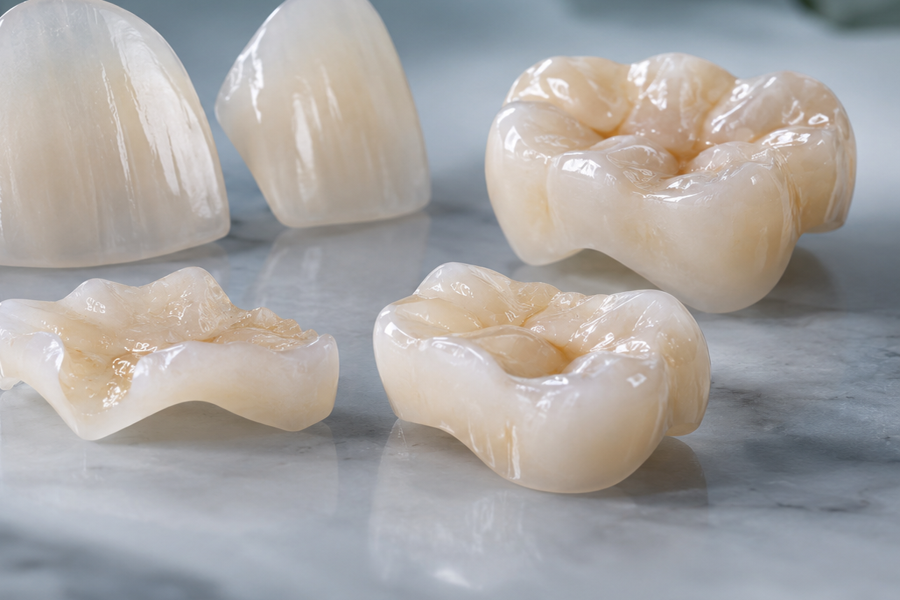
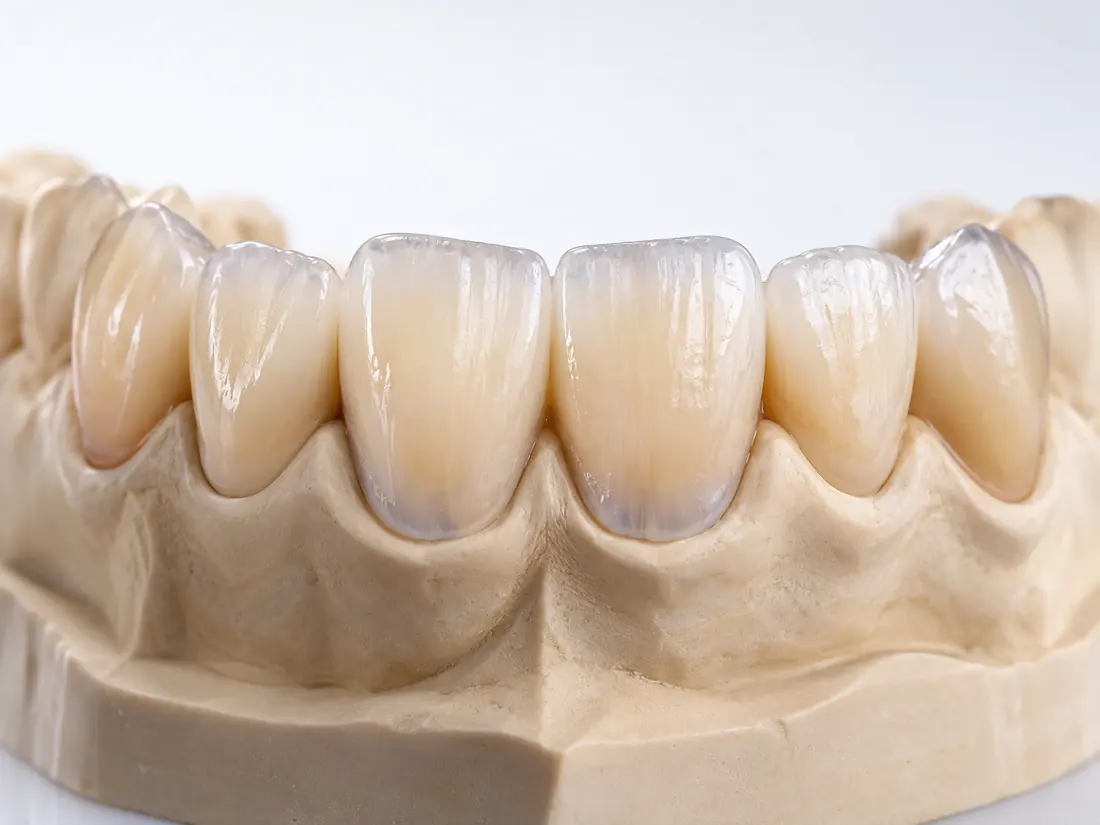
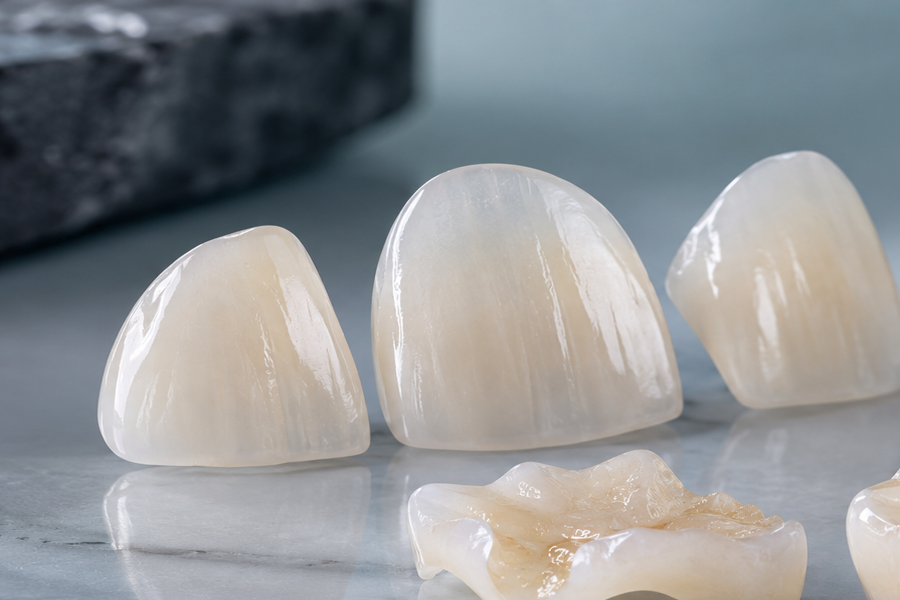
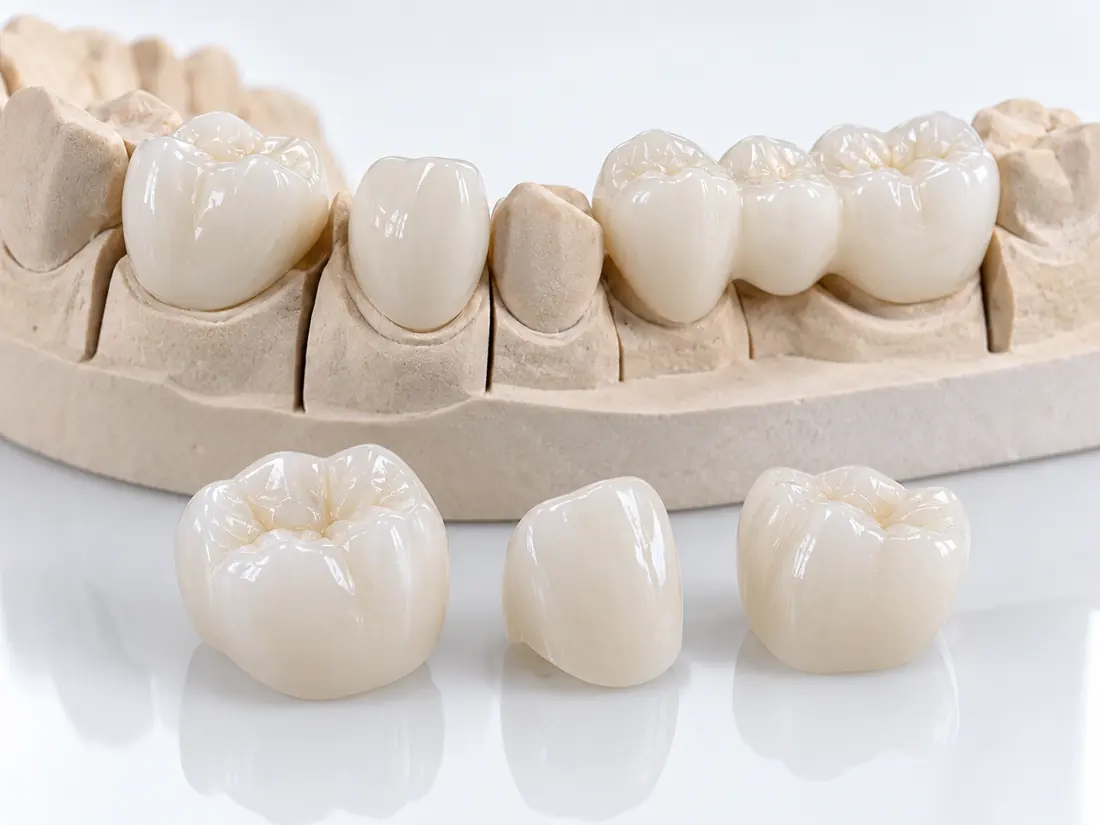
Inlays and onlays are fabricated outside the mouth to replace lost tooth structure without necessarily covering the entire clinical crown. An inlay sits within the prepared cavity, while an onlay extends to protect one or more cusps; the choice is made by the treating dentist according to remaining tooth structure and functional loading.
These restorations demand precise margin capture, a clear insertion path, stable proximal contacts and an occlusal design compatible with the chosen ceramic or other material. Digital scans can help communicate the preparation, but the quality of isolation and the clinical bonding protocol remain equally important.
Clarify which cusps are covered, available thickness, preparation finish lines, interproximal contacts and intended restorative material.
Material choice and preparation requirements to be confirmed per case.
Selected posterior restorative cases where a bonded partial-coverage solution is prescribed.
Glass ceramic or other suitable material options; cusp and occlusal design preferences.
Tooth number, prep geometry, shade, opposing scan and occlusion details.
Check preparation and margins → CAD design → manufacture → finishing and inspection.
Tell us your practice or lab type, country, required product, estimated volume and preferred contact method.
We confirm partner capabilities, required prescription details and a secure method for clinical files, if appropriate.
Prices, timelines, shipping arrangements and documentation are confirmed for the specific case and destination.
Clinical indications and treatment decisions remain with the prescribing clinician. Do not send identifiable patient information through the public contact form. We do not claim every product is available or permitted in every destination market.
Send an enquiry to discuss availability, technical requirements, partner capabilities, shipment and pricing.
Start an enquiry ↗